

What comes to mind when you think of resilience? World-class athletes? Scientists who dedicate their lives to their body of research? The astronauts currently on their way to the moon in Artemis II?
For me, it’s slightly less obvious. Resilience, for me, is in the mundane – the Mums who work 9-5 jobs and still find time for their training. The women who face – and fight – adversity. The humans dealing with the difficulties of daily life who refuse to be knocked down.
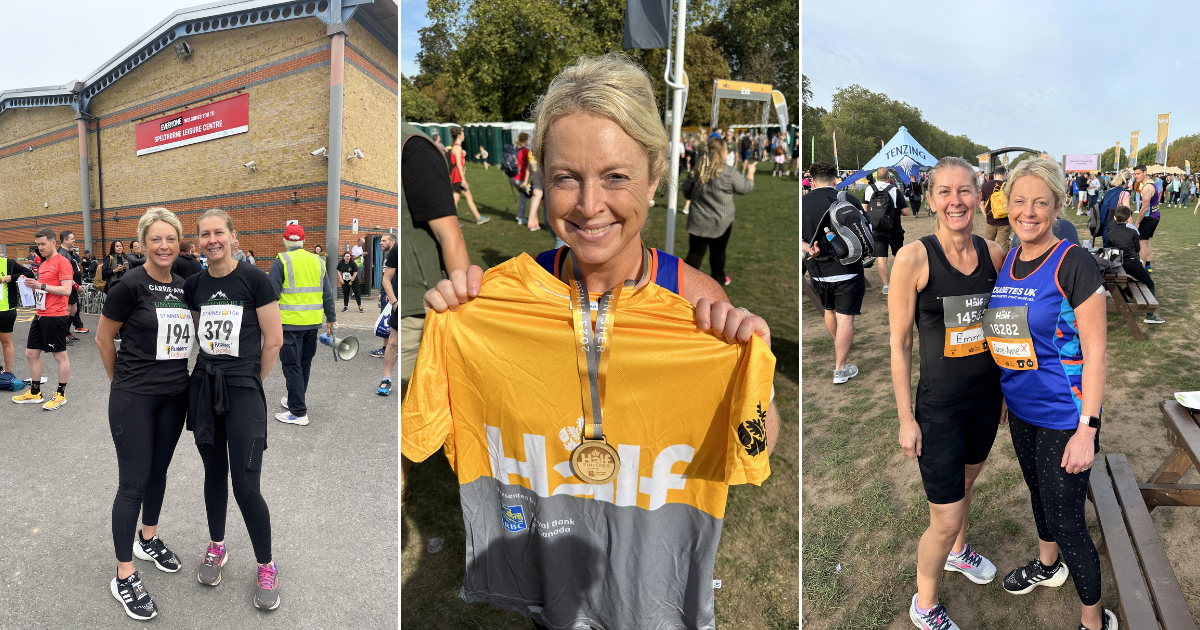
Take Carrie-Anne, a 47-year-old who, despite suffering from type 1 diabetes, neuropathy in her hands, and partial sight loss, runs most days and takes on marathon-length challenges to fundraise for charity. She trains through minus temperatures, snow, sleet, and rain – all to lace up, celebrate her freedom, and show the world what she’s capable of.
Article continues below
She hasn’t always been a runner, mind – she started running in her 40s after coming to the stark realisation that even running for a bus left her floored. But that day was the start of a journey that would shape her life – a gruelling but rewarding Couch to 5K programme, joking that before then she couldn’t even run for a bus. She now trains with guide runner Emma, who she calls an “absolute godsend.”
Her aim? To raise money for Diabetes UK and fund future research with the hopes of them eventually finding a cure. Running, for Carrie-Anne, has become a powerful symbol of resilience and self-belief, proving that diabetes does not define what she can achieve.
I think we could all take some inspiration from her story – of never giving up, of not letting barriers to entry define you, and of always aspiring to inspire hope and change. Below, she shares her story. Keen to scroll more of our running content? We’ve got plenty live on site for you, from guides to the best running apps, how to run faster, and the best strength training moves for runners, to buying guides to the best trail running shoes, best hydration vests, best running shorts, and best running sunglasses.
“I couldn’t run for a bus – now, running symbolises freedom and independence. My story”
“I was first inspired to sign up for the Couch to 5K programme as I’d put on a lot of weight through Covid, and felt I needed to do something. Along with focusing on healthier foods, I was keen to incorporate exercise that would gently ease me in, and also wouldn’t be costly, like joining a gym.”
“I absolutely hated exercise prior to that. I wouldn’t have even run for a bus. I was the pupil at school who used to get my mum to write a note to get me out of P.E.”
“Running was really hard at first, but I was determined to complete the Couch to 5K programme and wasn’t going to let it beat me – I can be quite stubborn. Once I had completed that, I wanted to get some medals. I started with doing a Parkrun and then a local 5km and 10km race. I slowly started actually to enjoy running, and before I knew it, it had become a habit. I was running three times a week – I loved being able to head out the door and run. Listening to my music and getting lost in my thoughts felt so liberating.”
Overcoming adversity
“Living with Type 1 diabetes is hard. You never get a break from it, and are constantly thinking about it and your eating, insulin requirements, and blood sugar levels, not to mention dealing with the complications that can go with it.”
“I was diagnosed with type 1 diabetes at the age of nine. But over the years, I’ve become very aware of the damage I feel my condition has done to my body. It was one of the main reasons why I decided to focus on my nutrition and exercise regimen in my early 40’s: I’d never made my condition a priority in my life. Everything else came first – my children, my husband, family life, and work. I’d always think about my diabetes last.”
“But it’s not only diabetes that I’ve dealt with. After having my youngest child in 2006, I started developing complications. I have neuropathy in my hands and feet, and I have partial sight loss due to macular oedema and other eye complications. This has had a devastating effect on my day-to-day life – I can no longer drive, which has taken away a large part of my independence. I can’t go out on my own as I can’t judge how close things are to me, such as cars and people.”
“I also need help with day-to-day tasks, which has had a massive effect on me. I worry that this has put a lot of pressure on my husband and children – it’s tough to deal with the fact they have to help me at home.”
Building up confidence, slowly but surely
” I have doubts all the time about what I can and can’t do. When I first started running, my youngest son would come out with me, or I would run on a treadmill so I felt ‘safe.’ Slowly but surely, I became a little more confident.”
“Then, I met Emma [a friend who runs alongside Carrie-Anne and ensures she stays safe during her training runs and races.”
“Running as a visually impaired runner, despite having its own unique challenges, has been great. I feel like I’ve accomplished something and proven to myself that I won’t let my sight stop me from doing what I want.”
“I’ve always felt fully included and welcomed at every event. The London Landmarks Half Marathon is one of my favourites – the organisers have always been so helpful and made sure I’m a part of whatever race it may be.”
Dealing with reality, rather than fighting against it
“I met my guide runner Emma at my local gym that I went to with my husband. We got chatting and she offered to run with me whenever I wanted her to. She is a absolute godsend, and ‘reads’ the road for me, letting me know any hazards that are coming up. She literally guides me throughout our runs, is so supportive, and also knows what to do and knows the signs if I start going into a hypoglycaemia episode.”
“There’s a lot of trust involved with a guide running relationship. She literally stops me from falling over, getting run over, and everything in between.”
“Running, to me, is everything. It’s given me a sense of freedom. I can only compare it to getting into your car and driving with the music on and the windows down – it gives me the same feeling.”
“It’s changed the way I see myself and my conditions, too. Since taking control of my eating and exercise routine, my diabetic control has become a lot better. It’s helped me accept the fact that I do have a life long medical condition and I need to deal with it, rather than fight against it.”
Movement changing lives, physically and mentally
“Running has helped me reclaim a sense of control over my health.”
“My goal was always to run the London Marathon, and I was very lucky to be able to do that in 2023. Now, I’m focused on being able to run for as long as I can.”
“My advice to someone with a health condition who thinks sport isn’t for them is simple. I was told all the time that I should try exercise and I would feel the benefits, but honestly? I just couldn’t be bothered. Everything hurt, and I just couldn’t get past that. But stick with it, as what it does for you physically but also mentally is truly life-changing.”
“If I could speak to my younger self, I’d encourage myself to take my diagnosis more seriously. Complications can happen to everyone; you won’t ‘get away with it’.”
“Running for me symbolises freedom and independence. I wish everyone could experience this feeling in their lifetimes.”
Shop MC UK’s go-to running essentials now:

HOKA Bondi 9 – Lilac Cream/tangerine Glow
The Hoka Bondis are a cult-favourite trainer design for a reason – as long as offering superior cushioning, bounce and support, they’re super cute and come in a range of fun colourways. We’ve already got our eyes on this pink and orange colourway.

lululemon Levitation Sports Bra *high Support, B–dd Cups – Black – 32c
lululemon’s running gear is a cut above the rest when it comes to breathability, function, and performance, and the styles are stylishly designed, too. This sports bra is a real all-rounder – great for a range of workouts and anti-chafe, too.