

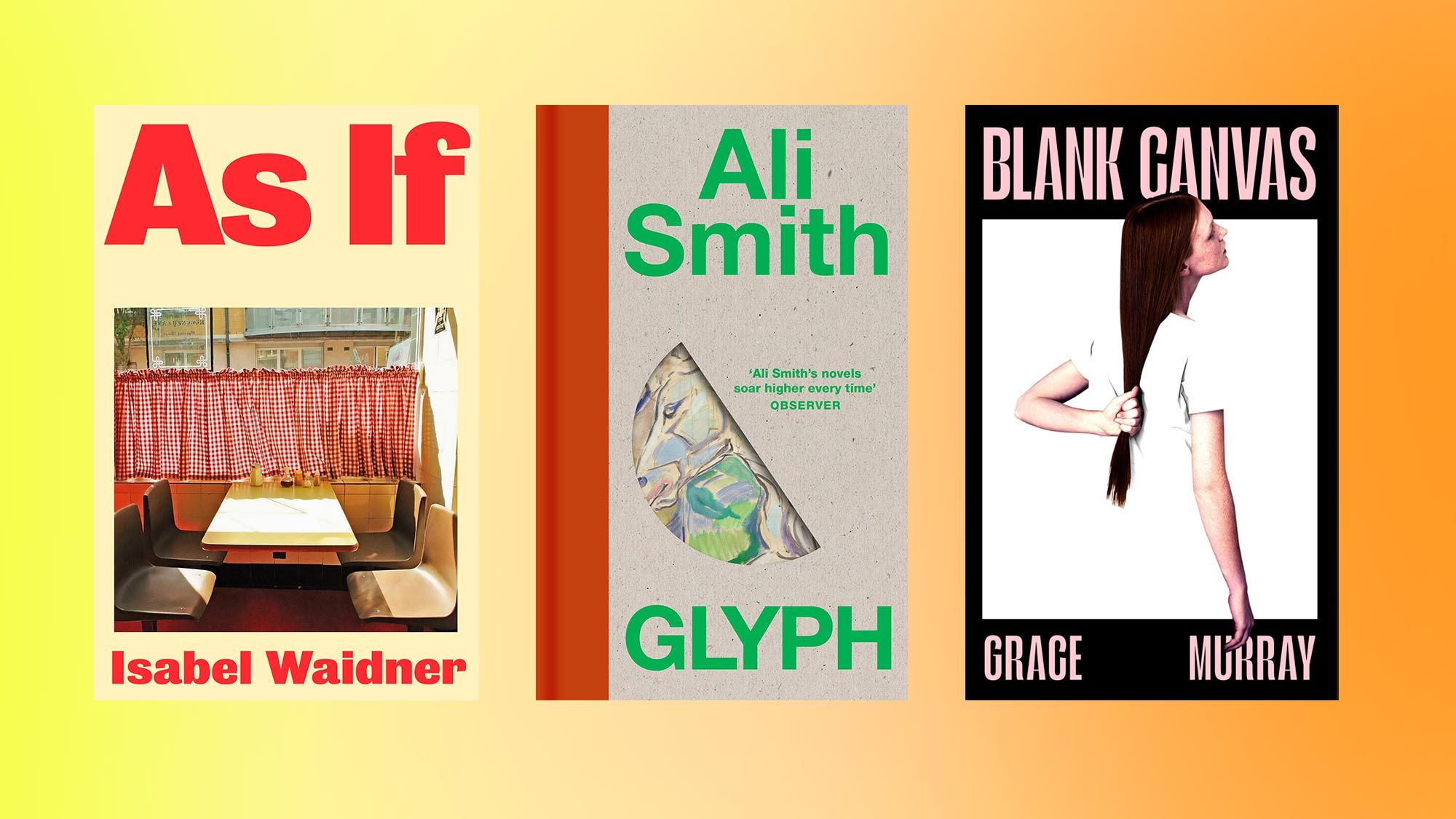
We begin our reading year with a bumper crop of tales that will have your TBR pile teetering. And rightly so. From surreal tales of crossed lives to sharp-eyed critiques on the judgement of strangers in the age of social media, via toxic motherhood, a near-psychopathically ambitious fashion journalist and more than one questionable sexual liaison, there’s plenty here to keep you reading all the way into spring. And with more than one of these already being tipped for this year’s literary gongs, you’ll be able to say you read it here first…
Funny and incisive, Waidner’s latest piece of genre-busting fiction is a surreal tale of two men with an uncanny resemblance to one another who cross paths and, essentially, swap lives. Lewis is a once-famous actor whose grief for his late wife might just be about to ruin his chances for another run at success. Disillusioned husband and father Korine, meanwhile, has walked out on his family and busy trying to avoid having to decide what to do about it. The answers for both of them might just be in the lives the other has left behind. But as the coincidences stack up, the question remains: are the pair mere physical doppelgangers or in fact true ‘doubles’ who are each holding up a mirror to the lives the other could have had? A very clever exploration of alternative lives and paths not taken.

2. Good People, Patmeena Sabit
It’s not hard to see why this clever debut was snapped up by publishers on both sides of the Atlantic on submission. Asking ‘what really happened’ in the wake of a tragic accident involving the teenage daughter of a family of self-made Afghan refugees, it gives voice to friends (and frenemies), family members, business owners and more, alongside news reports and court documents to offers an increasingly febrile take on the gossip and misinformation surrounding the events of that Labour Day weekend in a polyphonic style similar to Wendy Irskine’s superb 2025 release The Benefactors. There is an easy tie-in here with the current anti-immigrant sentiment that is increasingly taking hold in the US and further afield, but this astute expression of the rumour and speculation that swirls in the wake of a crime that catches fire with the court of public opinion is of course nothing new. Sabit moves deftly between arguments as we, as readers, bring our own prejudices to bear on just what actually happened on the night in question.

3. Blank Canvas, Grace Murray
On returning to her final year at a small US college, British art student Charlotte tells a lie – and boy is it a doozy. Asked how her break went, she claims her father died. Cue widespread sympathy, a whole new social life and, eventually, a queer awakening in the shape of fellow student and soon-to-be-girlfriend Katrina. Of course, Dad is alive and well and happily sinking pints with his mates back in his local. Also of course, this detail is going to come back and bite Charlotte right where it hurts. But not before Murray shifts the barbs and snidey asides of her misanthropic protagonist’s acerbic early narration to reveal a damaged young woman who proves to be her own worst enemy for all too human reasons. It’s just one of the ways in which this debut – written when 22-year-old Murray was herself at university – rises above the sad-girl tropes of its set-up to become a touchingly tender coming-of-age tale that feels nuanced and real. Think it’s safe to say we have a literary star in the making here, folks.

4. This is Where the Serpent Lives, Daniyal Mueenuddin
Already being tipped for some of this year’s big awards, Mueenuddin’s generation-spanning novel is broken into four interlinked stories – the first three of which introduce us to the key players who culminate together in the last. Covering roughly six decades in Pakistan’s post-partition history, from the 1950s – where we first meet the young street boy called Yazid who, roughly, unites all four narrative – to 2015, it weaves from city to countryside, tenderness to violence, lawlessness to power. It is brilliantly, compellingly written. And yep, expect to see it on shortlists everywhere soon.

5. Workhorse, Caroline Palmer
With The Devil Wears Prada sequel hitting our screens later this year, this sharp study of the cut-throat world of high-fashion magazine publishing at the turn of the millennium – where you can never be too thin or too well-connected – couldn’t be better timed. And indeed, Palmer is herself a former US Vogue staffer and self-professed ‘workhorse’ (as in privileged, but not quite privileged enough to join the ranks of the glossy ‘show horses’, who got all the best gigs and freebies). Throw in a Ripley-sized dash of cold-hearted grifter and you get Clo: a middlingly well-educated product of a middlingly wealthy home, which – in the eyes of her colleagues – makes her middlingly everything else, too. As Clo goes about climbing publishing and NY society’s greasy pole by fair means or foul, watch out anyone who gets in her way – not least her glamorous deskmate Davis, whose life Clo sets out to snatch. Hugely fun with razor-sharp humour and observations. But at over 500 pages, could have benefitted from some editorial calorie-counting of its own.

6. Suckerfish, Ashani Lewis
How responsible must you be to those who raised you? In Lewis’s brilliantly unsettling sophomore novel, fine art graduate Kolia is working as a private tutor for a wealthy London family when she is drawn back into the long-standing drama that has always surrounded her emotionally manipulative mother, Lalita. Of course, things are not as straightforward as they seem. And, as Lalita’s erratic behaviour increases, more of this is revealed, coming to a head when a forced expulsion sends Kolia and a friend on a reduce mission to the the Southeast Asian country of her mother’s family. But as the web around Kolia contracts and the more bound up in the toxic mother-daughter dynamic we become, what was a merely uncomfortable read becomes downright disturbing. The suckerfish of the title refers to ‘an animal identified by what it clings to’. Just who, you might come to wonder, is suckerfish to whom?

7. Eradication, Jonathan Miles
Who doesn’t want to save the world? A former jazz-musician-turned schoolteacher is offered the opportunity to do just that, he is told, when he applies for a job at an unnamed environment foundation committed to course-correcting centuries of damage inflicted upon our planet. His task? To spend five weeks alone on a tiny Pacific island far off the coast of South America and single-handedly destroy the population of invasive goats that have so nearly wiped out the ecological wonders it once supported in abundance. Reeling from a deep personal tragedy of his own, the man agrees. But when he arrives on the island, he discovers goats aren’t the only things there undermining the island’s future. What will it take for him to eradicate the enemy? And does he have it in him to even try? Like a great improvised jazz solo, Miles’ tale is both freewheeling and tightly contained. Complex, funny and sad, it is full of big ideas about planet, place and both social and ecological hierarchy. Just brilliant.

8. Half His Age, Jeannette McCurdy
It will come as no surprise that the buzzy debut novel of former child star and author of bestselling non-fiction title I’m Glad My Mom Died, is an in-yer-face read. Just how in your face is revealed in the very first pages where we’re introduced to US high-schooler Waldo in the middle of a less than satisfying sexual encounter with one of her peers. All that changes when new teacher Mr Korgi takes over the seventeen-year-old’s creative writing class and lessons of a very different kind soon follow. Frank, funny and very filthy – Lolita’s got nothing on this.

As the success of her acclaimed seasonal quartet revealed, Smith is the master of the companion novel, which are not sequels so much as playfully intellectual takes on shared themes. And here are again, with the follow-up to last year’s overtly political and darkly dystopian Gliff. But while Glyph shares the anti-war, big-tech focus of its partner work, those elements are rather less on the nose (a joke Smith herself makes in a sly reference to a review on the work) – it is all the better for it. At the heart of this tale are two sisters, a forgotten WWII soldier and the imaginary game they played as children in an attempt to offset the tragedy that shaped their shared childhood, all foregrounded by Smith’s trademark wordplay and humour. A powerful shoutout for shared humanity in the face of horrors, big and small.

10. Jean, Madeline Dunnigan
In this gently wistful coming-of-age story, we’re in an all-boys boarding school in semi-rural Britain during a long, hot 1970s summer. There, the Jean of the title is waiting out the days before he can head back to London, ready his ‘real life’ to begin. An outsider and troublemaker he has been largely ostracised by his classmates – that is, until one of them directs his attention Jean’s way. What begins as a wary friendship develops into something closer to the kind of relationship Jean has always longed to have. The boys slowly begin to explore their desires Jean’s past begins to catch up with him in more ways than one.

11. Seven, Joanna Kavenna
Where to begin with this pleasingly puzzling tale? We meet our unnamed narrator shortly after they get a job as an assistant to a philosopher who is writing a book about ‘thinking outside the box about thinking about the box’ – which is a pretty good a piece of advice on how to approach this rather brilliant, brain-twisting novel about – among many other things – a missing box of the ancient (fictional) game of Seven of the title. They’re sent on various quests across Europe that are pretty much all in the name of the game, with Kavenna throwing in both big and small ideas aplenty along the way on friendship, loyalty, the horrors of war, the slippery nature of truth, time and the whole dang universe. There is even, of all things, a cameo from Aha singer Morten Harket. Funny, absurd, astute: don’t try to overthink it – just settle in and open your mind to a reading experience that sits well and truly outside the box.

12. Our Better Natures, Sophie Ward
This thoughtful follow-up to Ward’s Booker-longlisted debut, Love and Other Thought Experiments blends fact and fiction in a tale of three overlapping lives amid the huge political and social upheaval of the 1970s. In Illinois, housewife Phyllis Patterson’s life is thrown into disarray when his son returns from the Vietnam war with a Korean wife and two children. In New York, poet and activist Muriel Rukeyser is determined to continue her fight in the face of ailing health. While in the Netherlands, the soon-to-be controversial feminist Andrea Dworkin has recently fled her abusive first husband when she has a lifechanging encounter with two leading philosophers of the day. Tying all these lives together is a glimpsed fourth narrative – a poet and political prisoner who is locked up in a faraway prison – through which the threads of all three women’s lives are slowly pulled together. It’s an ambitious and earnest (in a good way) novel that demonstrates that even the most ‘ordinary’ of lives can, in their own small, significant way, change the world.

13. Some Bright Nowhere, Ann Packer
Packer’s latest is framed by a brutal setup: Claire and Eliot, a long and ostensibly happily married couple, have been living with Claire’s cancer diagnosis for nine years when she is told her illness is terminal. She stops treatment and Eliot readies himself to see her through to the end – only for Claire to inform him that she has asked her two best friends to take on that role and asks Eliot to leave their family home. Ouch. Rather than sensationalise what follows, however, Packer explores Claire’s decision with delicate precision. Against the wishes of their two adult children, former management consultant Eliot initially acquiesces to Claire’s ruling, convinced she will come to her senses, with interactions between friends, family and former colleagues offering insight into the man he is perceived to be. By the time Eliot responds in the only way he can, we as readers have, to some degree, come to understand each party’s motivations. There are no monsters here, just messy, loving humans trying doing the best they can. And it is both all the more beautiful and all the more tragic for that.

14. The Old Fire, Elisa Shua Dusapin
After years of estrangement, scriptwriter Agathe returns to the French countryside to help her sister Vera clear out the family home following the death of their father. Already at an emotional crossroads in her life in New York, where she and her boyfriend have been tussling with the question of whether or not to start a family, Agathe is overwhelmed by the task ahead. And sure enough, as the pair go about sifting through the contents of the house and the memories held within its walls, details of their childhood gradually unfurl. Dusapin is too good a writer to spell out all that went wrong between the pair, leaving lots of space for us as readers to project our thoughts onto their knotty family history. ‘If I have to carry the memory alone, I’d rather forget it,’ Agathe says at one point about an incident Vera claims not to be able to recall, perfectly capturing the can’t-live-with-can’t-live-without push and pull of such difficult family dynamics. A deeply atmospheric, almost haunting, read – and quite brilliant with it.

15. Chosen Family, Madeline Gray
Nell and Eve became instant best friends from the moment their eyes met across a crowded swimming lesson in their mid-noughties Sydney school. We know from the opening setup that they eventually go on to raise a family together, but almost two decades later, they are estranged – just as, it turns out, they came to be back then. Gray’s follow-up to her debut, Green Dot is a queer coming-of-age story for anyone – gay, straight, or anything else – who has ever felt like the odd-on-out only known what it’s like to suddenly find their tribe. It follows Nell and Eve’s repeat story from forever-friends to enemies through the first glorious flush of their friendship through the cruelties of teenagerhood (Nell cuts Eve out for fear that the school bully’s accusations of Eve being a ‘lezzer’ might pass on to her), only for the tables to turn when Eve finds her queer tribe at university, and so on. It is tender, fierce, funny and sad – and will have you rooting for them to please finally sort themselves out. Just lovely.

16. Belgrave Road, Manish Chauhan
Mira is a young bride in an arranged marriage who has travelled from India to Britain alone to start a new life with her husband and his family; Tahliil a Somalian refugee who has fled his home country with his young sister and entered the country illegally to reunite with their mother. Both are struggling to adjust to the strangeness of their new homes when their paths cross shortly after they arrive in suburban Leicester. The pair connect and, inevitably, fall in love, but circumstances are against them. On the surface, then, this moving debut of two star-crossed young immigrants tells a relatively familiar story of love in the face of adversity. However, Chauhan lifts his story with such delicacy in tone and emotion that it rises above such labels, resisting easy outcomes and answers to leave a long, lingering impression. Highly recommend.

17. Vigil, George Saunders
Saunders is in familiar territory for the follow-up to his 2017 Man-Booker-winning debut, Lincoln in the Bardo. As then, we’re back in that thin space where spirits and the material world collide – in this instance, on the night that self-satisfied oil baron KJ Boone is about to die. Jill (aka Doll) has been brought in to ease his passage to the other side, ideally after he repents for his planet-destroying sins. Yet there are other spirits on hand with their own missions to achieve, and so the long dark night of the battle for Boone’s soul ensues. As ever, Saunders writes with wit and brio. However, his messages on climate damage and corporate responsibility are so the nose they threaten to preach only to the choir.