

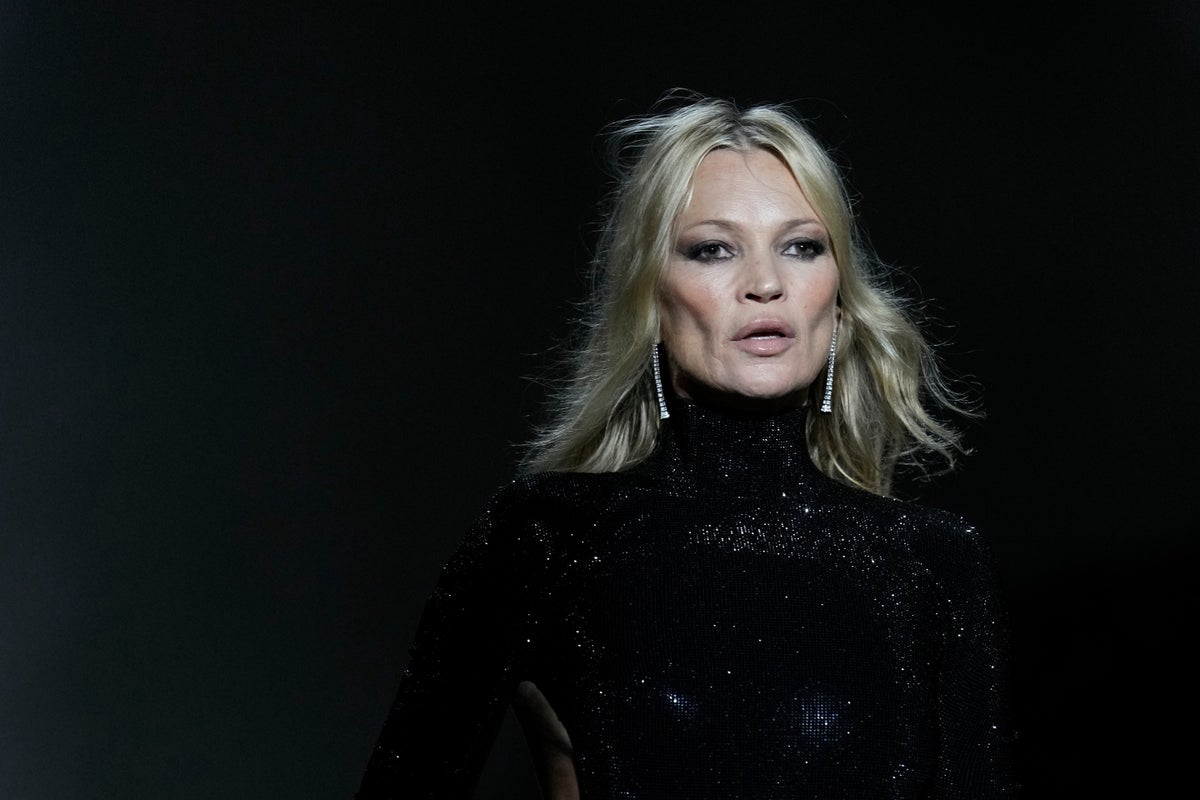
Kate Moss, 52, closed Gucci’s autumn/winter 2026 show in Milan in a floor-length black sequinned gown, its low open back revealing the unmistakable flash of a Nineties-style “whale tail” G-string – a detail that instantly transported the audience back to the house’s most provocative era.
The supermodel, who famously walked in Tom Ford’s debut Gucci collection in 1995, returned to the runway as part of a cast heavy with star power.
Karlie Kloss, Emily Ratajkowski, Irina Shayk, Alex Consani and Elsa Hosk were also among the line-up, turning the collection into a supermodel showcase.
Presented in a darkened room with models emerging from a doorway casting a stark light to create the runway, the collection felt dramatic from the outset.
Each look stepped out of shadow and into the light like a transfiguration – an apt metaphor for Gucci’s transformation under its new artistic direction by Demna.
Autumn/winter 2026 was a clear homage to Tom Ford’s sultry mid-Nineties vision for the brand.
Ford’s 1995 show – memorable for its satin shirts unbuttoned to the navel, velvet hip-huggers and unabashed sex appeal without revealing flesh – marked the moment Gucci reasserted itself as the creme de la creme of luxury labels.
This season channelled that same sensual charge.
Slinky satin skirts skimmed the hips, straight-leg trousers sat low on the waist and deep V-neck shirts exposed the torso.
Pencil skirts cut above the knee were paired with sharp tailoring, while body-conscious sequinned dresses featured dramatically high leg slits. Slip dresses also recalled the minimalist glamour of the decade.
Latex and leather injected the grunge edge of the 1990s, reinforcing the collection’s overt sensuality.
Sheer embellishments – another trend dominating fashion month – appeared across eveningwear, offering glimpses of skin beneath crystal detailing.
Feather trims, seen across multiple runways this season, edged gowns and hems, creating movement among the drama.
The Nineties revival extended beyond silhouette to the attitude of the models. Fur was slung over shoulders, structured handbags carried primly in the crook of the arm and struts were confident and knowingly provocative.
Menswear also played with codes of exposure and vulnerability. Barefoot male models walked in loose two pieces, creating an undone intimacy that contrasted with the high-gloss womenswear.
Gucci’s history has been defined by seismic creative shifts. Founded in Florence in 1921 as a luggage company, the brand rose to international prominence under Aldo Gucci before suffering from over-licensing and family disputes in the 1980s.
Tom Ford’s appointment in 1994 famously revived the house, ushering in an era of unapologetic glamour that transformed Gucci into one of fashion’s most powerful names.
Subsequent creative directors – from Frida Giannini’s rock-inflected romance to Alessandro Michele’s bohemian maximalism – each left their mark.
Now, with Demna – formerly of Balenciaga – newly installed at the helm, AW26 suggests a return to overt sensuality reworked for a contemporary audience.
The audience response was emphatic. Stars sitting among the front row included Demi Moore, Donatella Versace and Alessandro Michele.
As Moss completed her closing walk, clutch in hand, the room rose to its feet in a standing ovation – a rare accolade during a season defined by reserved admiration.
It seems Gucci’s message was that the Nineties are not merely back; they are reclaimed and reasserted and, judging by the reception, people are more than ready for it.