

I’m 41, but I look 25. I’ve discovered that’s the consensus of nearly everyone I meet. Rather annoyingly, it’s become a habit of mine to casually drop my age into conversation with new people just so I can see their amazed reactions.
Regardless of whether we admit it or not, it’s pretty much a universal desire amongst all of us to look as youthful as we can. The beauty industry wouldn’t be the big business it is if it weren’t. Despite this, something about glorifying not looking my age leaves me slightly uncomfortable.
So, I want to begin by clarifying—this isn’t an ‘anti-ageing’ article, it’s an article sharing the skincare secrets behind how I have helped my skin retain many of the health features most often associated with young skin—aka plumpness, firmness, smoothness, and glow.
Article continues below
It’s important, however, to remember that whether my skin shows signs of ageing or not isn’t just down to what I’ve done or not done to my face. There are so many other factors at play when it comes to skin ageing, as Dr Ben Taylor-Davies, Aesthetics Doctor and Clinical Director of The Stockbridge Clinic, explains: “It’s influenced by several key factors including genetics, hormonal changes, UV exposure and other lifestyle factors such as stress, smoking and health habits. Loss of collagen is one of the key changes we see—this is caused by intrinsic factors such as hormones, and extrinsic factors such as UV (sun) exposure over a person’s lifetime.”
I have always taken a 360-degree approach to skin health, which has contributed to my skin’s youthful appearance. Since I was a child, I’ve kept out of the sun and been religious with SPF application. I’ve never smoked or drunk much alcohol, and I’ve rarely been a city centre commuter exposed to high levels of environmental pollution.
On the other hand, I have been through premature menopause, and I am permanently stressed from an anxiety disorder. Dr Taylor Davies stresses the importance of having healthy lifestyle habits – “prioritising sleep, minimising stress and avoiding smoking play a huge role in ageing well. Good skincare is also key and this doesn’t need to be complicated. Also, certain in-clinic treatments (such as Ultherapy Prime and laser treatments) are non-invasive and can give excellent results for those wanting to explore this avenue.”

Probably most importantly, what I’ve had since around the age of 16, is a daily skincare routine and a daily addiction to sheet masks. When I say that I dedicate around two hours per day to my skincare routines, I’m not exaggerating. It’s a luxury not many people have, but as a freelance beauty editor, I get to justify it as being part of my job.
But as Dr Taylor-Davies said, yours doesn’t need to be as complicated as mine. “A daily broad- spectrum sunscreen, a vitamin C in the morning, and a retinol or retinoid at night is the foundation to skin health as we age,” he says. “We’re also seeing lots of promising science around topical peptides too. Effective skincare can be started as soon as the late teens and early twenties. If you’re young, then you don’t need more than a good daily sunscreen and vitamin C serum. In the late 20s and early 30s I recommend introducing a retinoid.”
I’ve also had a select few in-clinic treatments that I feel work for me, though I haven’t ventured near injectables yet.
ANTI-AGEING TREATMENTS I RECOMMEND IN 2026

Red Light Therapy

Foreo
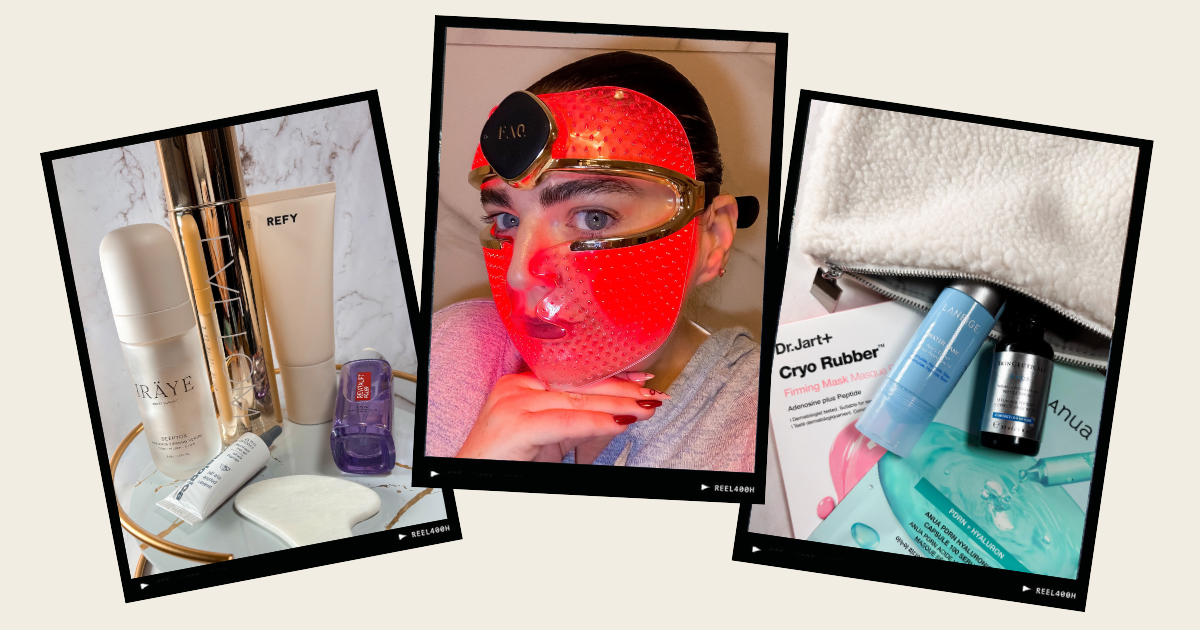
FAQ™ 202 Red LED Light Therapy Mask
Pros
- It’s ultra-lightweight and can be worn as you move around the house.
- It has 600 LED light points, which spreads the light evenly across your face.
- It also has 6 other colours of LED light to target different skin concerns.
Cons
- It’s one of the most expensive masks on the market
Microcurrent Therapy

ZIIP BEAUTY
Ziip Halo 2.0
Pros
- A small portable device that’s easy to travel with.
- Comes with an app for guided facials.
- It also tackles uneven texture and pigmentation, and boosts glow too.
Cons
- It’s an expensive device to purchase.
Ultherapy Prime
In terms of in-clinic treatments, I’ve never had any injectables and have only found one that delivers on younger-looking skin. There are downsides: it’s quite painful to get and rather expensive, so it’s important to go to a clinic you know and trust. I get mine done at The Stockbridge Clinic in Edinburgh, and the results from one single treatment last for years.
Dr Ben Taylor-Davies, Clinical Director at The Stockbridge Clinic, explains that “Ultherapy Prime is a non-invasive treatment that uses targeted ultrasound energy to precisely stimulate the production of new collagen and elastin in the deep structural layers of the face.”
This leads to tighter, more lifted skin, so it’s fantastic for anyone bothered by drooping of the skin around the jawline, neck or brow—key areas people often report seeing ageing changes. It can even be used for the body and results are seen after only a single treatment, making it perfect for anyone looking for a non-invasive way to age on their own terms.
I find the results of this treatment phenomenal, and I get it on my lower cheeks, jaw and neck. I see an improvement in tightness and lift after just a few months, and the results usually last a couple of years.
ANTI-AGEING SKINCARE PRODUCTS I RECOMMEND IN 2026


Skinceuticals P-TIOX Neuro-Peptide Serum
Pros
- Powered by an Advanced Peptide Complex that targets 9 types of expression lines to reduce them and smooth the skin.
- It also contains gently exfoliating PHAs, and texture refining Niacinamide.
- Hydrates the skin and gives a glass-skin finish.
Cons
- It’s a pricey serum, and it can be easy to be too generous with the application.

IRÄYE Skincare
IRÄYE Deeptox Radiance Firming Serum
Pros
- Packed with hydrating and anti-ageing ingredients like Vitamin C, Bio-Retinol and Niacinamide.
- Its unique The Lymphactive™ Complex really works to drain excess water from the skin for more defined facial contours and less puffiness.
Cons
- It is at a higher price point.

L’Oréal Paris
L’Oréal Paris Revitalift 1.5% Hyaluronic Acid Serum
Pros
- It feels amazing on the skin and instantly plumps it with hydration, diminishing fine lines and wrinkles.
- Contains 3 different types of Hyaluronic Acid to penetrate all skin layers.
- Affordable
Cons
- Does have a slightly tacky finish, which I personally love, but many don’t.

Laneige
Laneige Water Bank Aqua Facial Hydrating Serum for Glow
Pros
- Has a unique triple blend of acids to gently exfoliate and refine the skin.
- Gives skin a powerful boost of moisture, and inflammation-reducing PDRN.
- Contributes to a glass-skin look.
Cons
- The push-down dropper applicator is unnecessarily complicated.

Skinsculpt Skincare
Illuminera
Pros
- Anti-glycation product that tackles the effects of sugar on the skin.
- Anti-cortisol product that tackles the effect of stress on the skin.
- A trio of actives (peptides and Bakuchiol) to reduce lines, boost collagen production and improve elasticity.
Cons
- The glowy finish won’t be for everyone.


NATURIUM
Vitamin C Complex Serum
Pros
- Helps to stimulate collagen production.
- Very affordable
- Contains highly stabiised forms of Vitamin C – l-ascorbic acid complex and sodium ascorbyl phosphate.
- Hydrates the skin well.
Cons
- You need to remember to shake it well before use.

Beauty Pie
Youthbomb Extreme Retinal Triple Renewal Serum
Pros
- A triple complex of Retinoid, Retinal and Bio-Bakuchiol for powerful anti-ageing results.
- Powerful line-reducing results after just 4 weeks.
- Also contains skin texture refining Lactic Acid.
Cons
- Not one for sensitive skin as is intense.


Anua
PDRN Hyaluronic Acid Capsule 100 Serum Mask
Pros
- Its star ingredient is viral, collagen-boosting, inflammation-reducing PDRN.
- It’s soaked in a water gel formula, so it evaporates less quickly.
- Contains 11 types of hydrating Hyaluronic Acid.
- Also contains skin texture refining Niacinamide.
- Very affordable per mask.

Dr.Jart+
Cryo Rubber™ Firming Mask
Pros
- Its cooling cryo technology firms and minimises pores.
- Extra hydrating and firming as an ampoule is applied underneath the mask.
- Contains firming adenosine and peptides.
Cons
- It isn’t the cheapest sheet mask on the market.

REFY
REFY Face Sculpt Moisturiser
Pros
- A unique massaging and lifting roller ball applicator.
- Instantly cooling and redness reducing.
- Hydrates, plumps and firms with glycerin and a peptide complex.
Cons
- The light gel cream is better for dehydrated skin rather than dry skin.

Dermalogica
Awaken Peptide Eye Gel
Pros
- Instantly cools and refreshes the eye area and minimises puffiness.
- Safe to use all around the eye.
- Uses caffeine and peptides to refresh, brighten and reduce fine lines.
Cons
- It’s not the most affordable eye cream.

EVE LOM
Time Retreat Restorative Skin Essence
Pros
- Instantly hydrates and plumps skin with moisture.
- Has Pre-Biotic Oat Kernal to help balance the skin microbiome, calm, and support a healthy skin barrier.
- Uses Milk Thistle (a bio-retinol) to reduce lines and refine skin texture.
Cons
- It’s very expensive compared to other essences out there.