

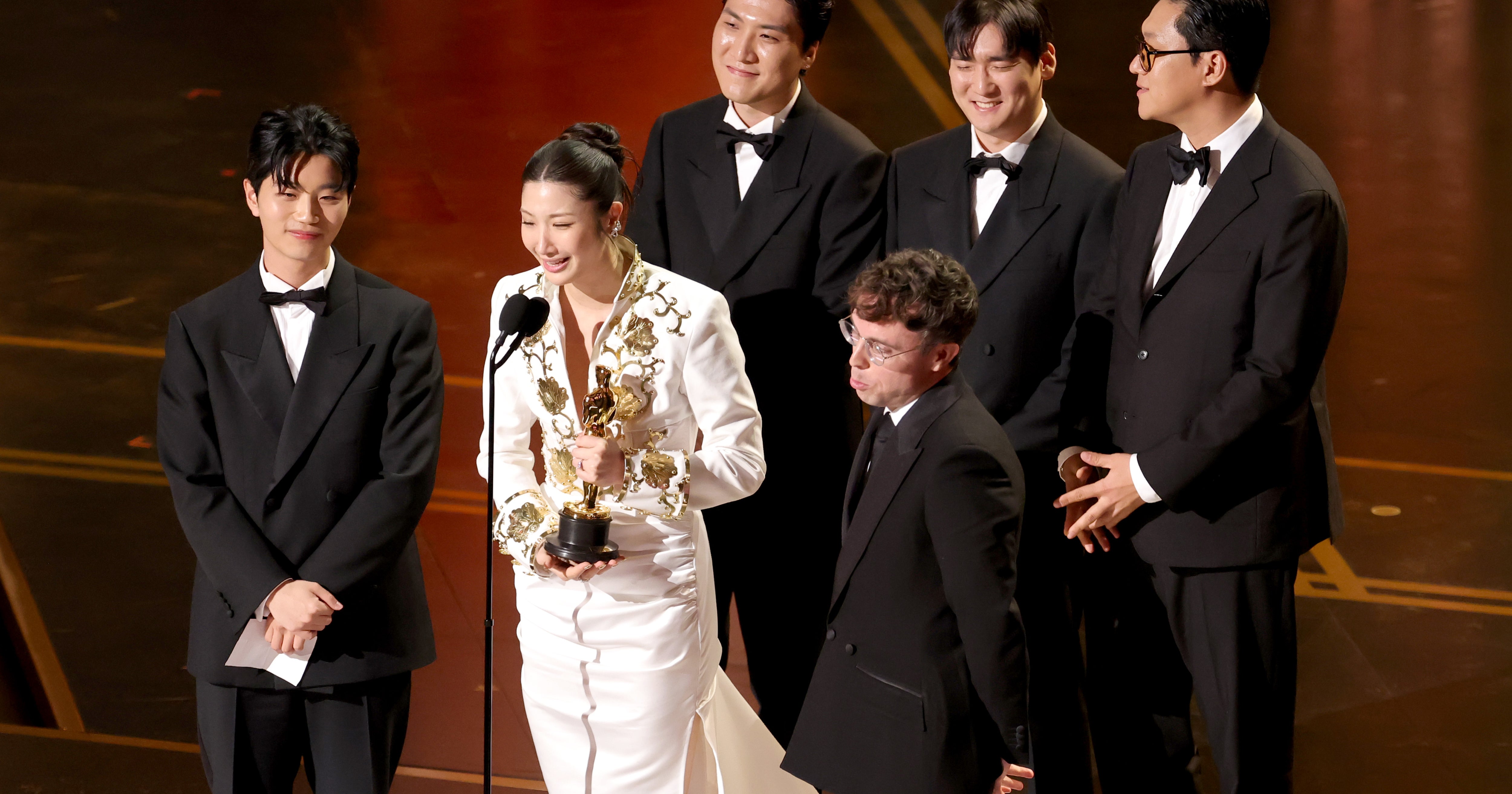
Chances are, if you’re someone who’s been anywhere on the internet over the past eight months, you know — and have obsessively hummed — the defacto theme song to Kpop Demon Hunters. “Golden,” arguably *thee* title track from the Netflix animated movie. The song is everywhere and not only is it a cultural phenomenon gracing our TikTok FYPs, topping music charts in over 30 countries, it also made history as the first ever K-pop song to win a Grammy at the 2026 Grammy awards earlier this year and took home awards for Best Animated Feature and Best Original Song at the Golden Globes. Similarly, the movie — which follows girlband members Rumi, Mira and Zoey as they attempt to battle demons — has seen equal accolades. The movie, which became the most-watched original title in Netflix history, made history once again at the 98th annual Academy Awards, taking home accolades for Best Animated Feature and Best Original Song
The win marked the first time a K-pop song has won in the ceremony’s almost 100-year history. Earlier in the show, performers EJAE, Audrey Nuna and Rei Ami, the three singers behind the voices of fictional band Huntrix and awards season red carpet standouts, performed the hit song live to much fanfare.
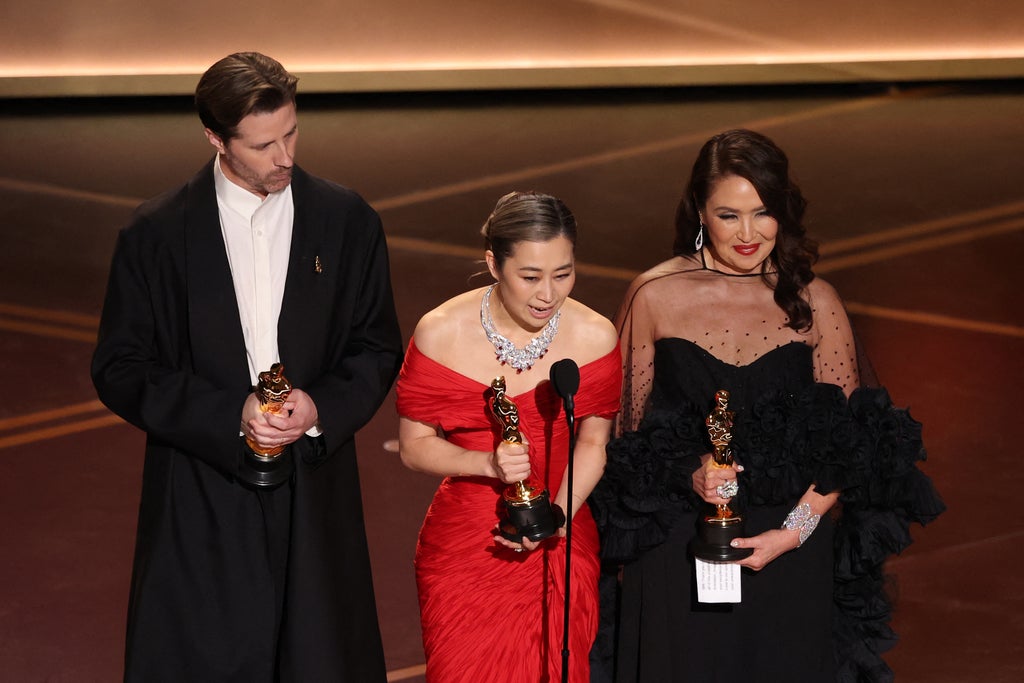
Their wins at the Oscars — an awards show and academy that has long only awarded films and performers that looked a certain way (*ahem white) while exploiting diversity — were monumental. Not only because they were history-making, but because of the very real impact that seeing these movies, songs, and K-pop in popular media can and will have on younger generations of Asian Americans. As writer and singer EJAE said in her speech, when accepting the award for Best Original Song alongside her co-writers: “Growing up, people made fun of me for liking K-pop. But now everyone’s singing our song and all the Korean lyrics. I’m so proud.”
EJAE went on to say that she had realized, similar to the message of their award-winning song, receiving the award from the Academy “is not about success, it’s about resilience.”
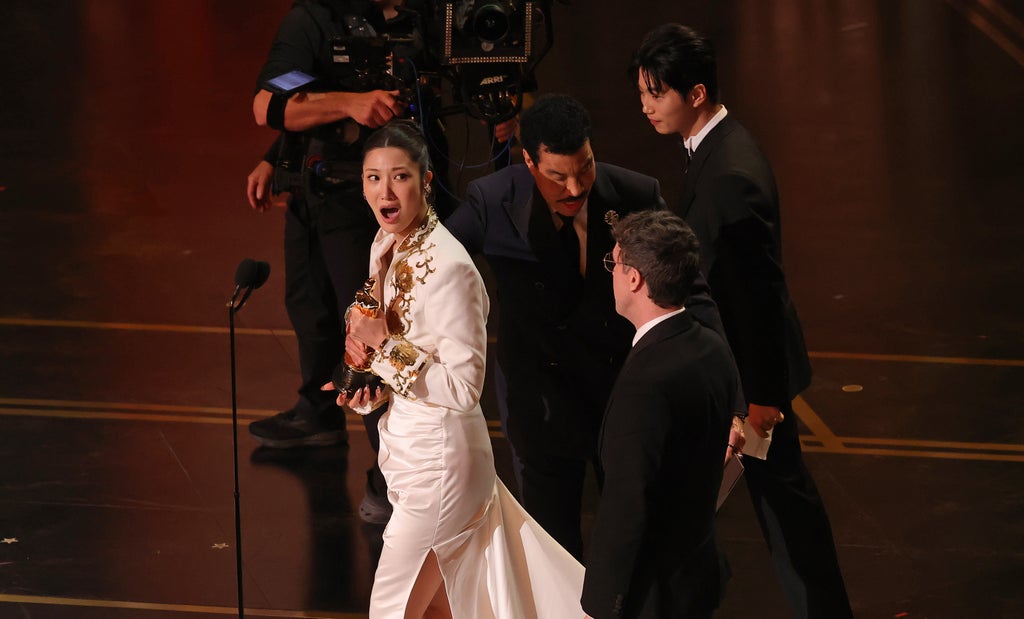
It’s a sentiment that many creatives of color, those who have long struggled to find success and gain recognition in an industry that’s baseline has remained stagnant for decades, can relate to. The constant grind for your work to be accepted for what it is — art that’s worthy of celebration. Which is why what happened mere seconds after EJAE’s speech was so disappointing. After handing over the microphone to fellow songwriter Yu Han Lee, Lee — speech in hand — was quickly cut off by the telltale “wrap it up” music. As the orchestra got louder and the camera panned away, Lee was seen trying to give his speech while EJAE and the other songwriters seemingly pleaded with production to let him continue.
It didn’t work; and the audience in the Dolby theatre could be heard audibly gasping and booing as the music continued. (Lee reportedly finished his remarks backstage in the Press Room). The idea of cutting off talent in arguably the most important moment of their careers isn’t anything new. As social media users noted, several winners — many of them people of color — were unceremoniously cut off by the melodic version of the Vaudeville hook, which doesn’t make sense, considering the whole point of these awards shows is to, you know, honor the industry’s creatives.
Several winners — many of them people of color — were unceremoniously cut off …which doesn’t make sense, considering the whole point of these awards shows is to, you know, honor the industry’s creatives. Let the people speak! Let the people thank their moms!
katherine singh
While it’s an honestly terrible thing to do in general — to the point that the show’s host Conan O’Brien even made a dig at the ruthlessness of the practice — it’s especially upsetting when creatives and projects that don’t typically receive recognition in “mainstream” spaces are being awarded. Honestly, let the people speak! Let the people thank their moms!!
Which isn’t to say that the whole awards season — and the movie’s celebration in other spaces — is a wash. Because regardless of whether or not the songwriters were able to finish their speech at the Oscars, the fact remains that the movie is a success — and it’s having a massive, tangible impact on representation. Which is worth celebrating.
As many presenters during the Oscars either briefly alluded or directly spoke to, we’re in an incredibly fraught time. Moments of joy are harder to come by and more important than ever; which is exactly why something like KPop Demon Hunters, which has managed to bridge gaps, bring people together, and make people feel good, is more vital than ever.
And in an awards season and year of movies that lent themselves more to the typical prestige fare, like Chloe Zhao’s Hamnet and Paul Thomas Anderson’s One Battle After Another, it’s been thrilling to see people around the world embrace K-pop and want to engage with the language, mythology, and culture that inspired KPop Demon Hunters creator and co-director Maggie Kang to create it, as well as realize that no, you don’t have to necessarily inherently understand and identify with a culture or cultural touchstones to enjoy and endorse it. (People of color and outside mainstream western media have been doing just that forever, FYI!).
Equally exciting? Seeing the world being introduced to and appreciating the artistry of Korean designers via the cast’s stunning — and super visually interesting — red carpet looks, often injecting some much needed color into the sometimes drag red carpet rotation. (Arden Cho in Miss Sohee at the Oscars is a standout).
And the hope is that the success of films like KPop Demon Hunters on a global stage means the door will be opened to more representation, with more frequency. As Kang said during her speech, accepting the Oscar for Best Animated Feature: “For those who look like me, I’m so sorry that it took us so long to see us in a movie like this, but it is here. And that means that the next generations don’t have to go longing.”
And hopefully next time everyone will be able to finish their speech.
Like what you see? How about some more R29 goodness, right here?
Our Favorite 2026 Oscars Red Carpet Looks
Catherine O’Hara Wins Posthumus Actor Award
Political Pins Were Golden Globes Style Statement