

[ad_1]
If, like me, you’re turning 40 this year, you might be wondering what – if anything – you should change when it comes to your workout routine. Even though I don’t physically feel any different yet – touch wood – it’s hard not to question whether this is the point where training needs to shift, or even slow down?
The thing is, I hear more and more women saying the opposite: that they feel fitter in their 40s than ever before. And according to fitness experts, that’s not a coincidence. As Katy Reynolds, Founder of Your Barre Studio, puts it: “Many women actually feel fitter and stronger in their 40s because they’re finally training in a way that truly supports their bodies.”
In other words, it’s not about doing less – it’s about doing things differently. The idea that women have to dial things back once they reach a certain age is, thankfully, quite an outdated notion. The science agrees too, with research suggesting that structured, intentional training – particularly resistance work – can help preserve strength and counteract age-related muscle strength well into midlife.
Keen to find out exactly how I can enter my 40s feeling my strongest, I’ve spoken to leading experts to find whether workouts need to change, why rest has never been more important, and what the best workouts for 40 year old women actually look like. Before you scroll on, check out MC UK‘s pick of the best longevity exercises, strength training workouts and low-impact strength training.
5 best workouts for women in their forties, plus expert advice for feeling your strongest, whatever your age
Do you need to change the way you workout in your 40s?
One of the biggest changes at this stage is our hormones, explains women’s health coach and founder of Owning Your Menopause, Kate Rowe-Ham. “In our 20s and early 30s, many of us can train hard, sleep badly, eat inconsistently and still feel fine,” she says. “In our 40s, hormonal changes begin to influence muscle mass, recovery, joint health and energy levels. As a result, random or excessive training tends to catch up with us more quickly.”
The good news, shares Rebecca Bossick, physiotherapist and co-founder of One Body LDN, is that it doesn’t mean you have to do less. “The most important adjustment is moving away from random workouts and towards more intentional training.”
Workouts need to be better balanced and structured at this stage in life, says Rowe-Ham. “They should be built around long-term progression rather than short-term burn. Strength becomes the foundation, and recovery is now a crucial part of the plan.”
In other words, workouts are about training smarter, prioritising strength and recovery, and building a routine that supports you for the long haul.
Can you still train hard in your 40s?
Short answer – you absolutely can still push yourself, albeit just a little smarter.
The common mistake is trying to maintain the same volume of high-intensity sessions as before, often alongside high stress, poor sleep and under-fuelling, says Rowe-Ham.
“This is when fatigue, injuries and plateaus tend to appear. High-intensity workouts are most effective when they’re limited to one or two sessions a week and balanced with strength training, lower-intensity movement and proper recovery.”
From a physio perspective, Bossick agrees. “Women in their 40s need to be smarter about how often they push their bodies to their limits – which could include rotating between heavy, moderate, and lighter training days as well as LISS and HIIT workouts.”
She also highlights the role nutrition plays in recovery. “Protein intake becomes especially important in your 40s because the body isn’t as efficient at building muscle. Prioritising enough protein across the day supports muscle repair and overall performance.”
This allows the muscles and joints to recover while still building strength, but importantly, minimising the risk of damage.
What are the best workouts for 40 year old women?
According to the experts, the best workouts for 40-year-old women are those that balance strength training with mobility, lower-intensity movement and proper recovery.
1. Strength training
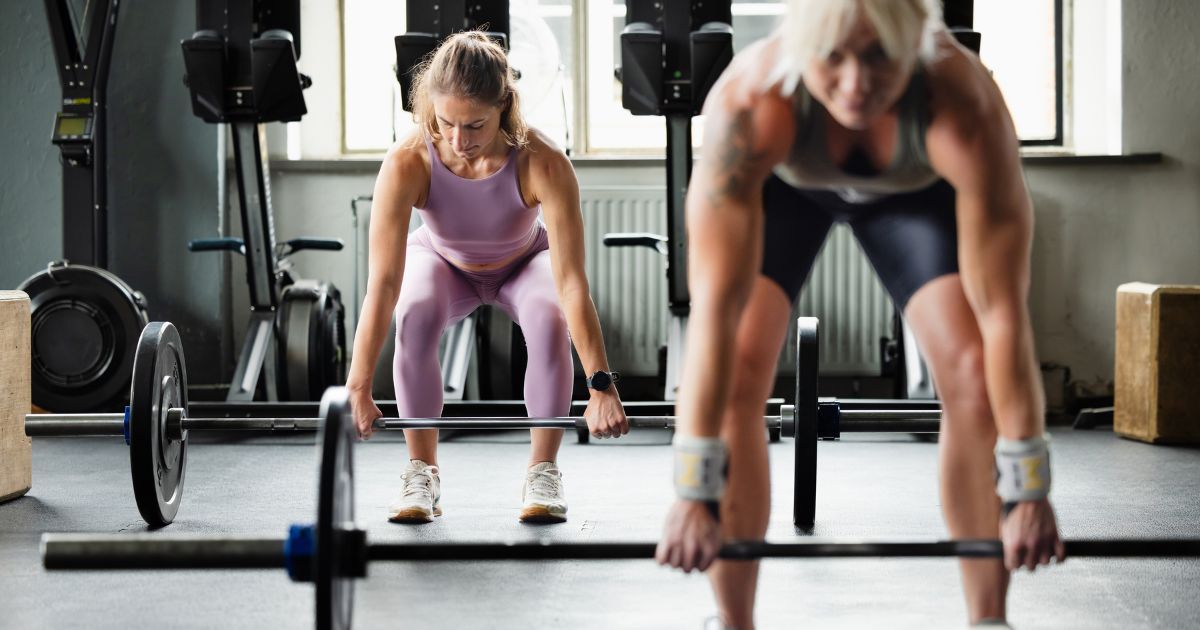
The one phrase that repeatedly cropped up when I spoke to the experts? Strength training.
“From our 40s onwards, strength training becomes non-negotiable,” says Reynolds. “We naturally start to lose muscle, which affects metabolism, bone density, posture, and long-term joint health. As a result, random or excessive training tends to catch up with us more quickly.”
Not only does strength training help offset this decline, but it also plays a key role in supporting hormonal balance by improving how the body manages stress and blood sugar. Reynolds recommends two to four full-body sessions per week, focusing on functional movement and progressive overload.
This is echoed by Rowe-Ham, who says: “We need to see strength as the priority, not something to squeeze in around cardio – it should form the backbone of the week.” She suggests incorporating compound movements, such as squats, hinges, pushes, and pulls – which can all be transformative for both strength and confidence.
There’s scientific research to support this, too. A systematic review from the Melbourne Women’s Midlife Health Project found that resistance training improves strength and physical function in midlife and post-menopausal women.
2. Mobility and joint stability
Maintaining flexibility and joint stability in your 40s is crucial. “The hips, spine, and shoulders are the three areas that tend to show wear first,” says Bossick. “Mobility work that focuses on hip rotation, such as Pilates or yoga, helps preserve the joint’s range of motion and prevents compensation patterns that can cause pain.”
Mobility is just as important as strength and shouldn’t be seen as an optional extra, adds Reynolds. “Mobility and joint stability need to go hand-in-hands and they really keep the body moving well, pain-free, and confident in everyday life.”
3. Low-intensity movement and recovery
Recovery doesn’t just involve rest days – it includes active recovery too. Low-intensity movement, such as walking, can play a powerful role in supporting both physical and mental wellbeing.
“Walking supports cardiovascular health, stress regulation and recovery without placing extra strain on the nervous system, making it an incredibly powerful but often overlooked tool,” says Rowe-Ham.
Sleep and stress management also become key recovery pillars in your 40s. The challenge is that sleep is often one of the first things that hormonal changes can affect. “Poor sleep actively undermines your ability to build muscle, regulate cortisol, and manage stress, so it should be treated as seriously as training sessions,” explains Bossick. “This means prioritising consistent sleep schedules, managing stress, addressing any sleep disturbances, and creating the best sleep environment possible.”
When recovery is treated as part of the plan (and not an afterthought), it becomes easier to train consistently, feel stronger, and avoid burnout in the long term.
“The most important realisation I help women make is that it’s never too late to start”
“It wasn’t until my late twenties that I was introduced to lifting weights.
“Outside the gym, though, life looked very different. I was still working in advertising and always felt like there was something missing.”
“Seeing how my strength sessions not only transformed my body but also my inner confidence and strength, totally changed how I viewed my whole routine. That feeling of empowerment, strength and improved overall wellbeing was something I wanted to share with others.”
“So, in 2001, I took the leap and decided to qualify as a PT in order to deepen my knowledge, from nutrition and sports rehab to pre- and postnatal exercise. And that’s when things really started. I started my PT business and began teaching group classes to the mums at school. We’d often have 20-30 mums at any one time, and the local community around my classes really grew.”
“Lockdown was pivotal, as that was the moment that Caroline’s Circuits was informally born. All of my local clients had been lifting weights for years with me at that stage, and they were very keen that we kept it going across a screen whilst we were all at home. Not only did it give us a community in those times, but the group started to build very quickly.”
“The most important realisation I help women make is that it’s never too late to start, and that ageing doesn’t have to mean weakening. Movement is a lifelong ally, and what we do today can impact our quality of life for decades to come.”
“I hope people finish my sessions feeling strong, not just in their muscles but in their mind too. They should feel energised and proud of what they’ve completed.”
Shop MC-approved go-to workout essentials now

Oner Active Softmotion™ Shorts 6″
While I’m still living in leggings, I’m dreaming of warmer weather, and these Oner Active Softmotion™ shorts are firmly on my birthday wish-list. Health Editor Ally Head has tested extensively and confirms that they’re supportive, flattering and ideal for keeping cool during hot workouts.

Songmics Set of 6 Dumbbells
New to strength training? Invest in a set of at-home dumbbells. This set of 6 will make it easier to progress at your own pace.

CoreBalance Muscle Roller
A foam roller is a simple but underrated recovery tool for easing tight muscles, improving mobility and helping you feel looser between training days.
What warning sign should women in their 40s not ignore during workouts?
Persistent pain that doesn’t improve with movement or warm-up is the clearest signal that something needs to change in a workout routine, believes physiotherapist Rebecca Bossick.
“In your 40s, tissue healing slows down, meaning small niggles that might have resolved quickly in your 20s now have the potential to develop into long-term injuries if not addressed early, so it’s crucial to take even the smallest amount of pain seriously,” she says.
It’s also important to know when to stop, adds Bossick. “Pushing through certain injuries can cause long-term issues, so always err on the side of caution and make your recovery routine just as, if not more important than, your workout routine.
This could involve building in warm-up and cool-downs to routines, using foam rollers or sports massages, and supplementing workouts with exercises that help to strengthen and protect joints long-term.
[ad_2]
Source link