

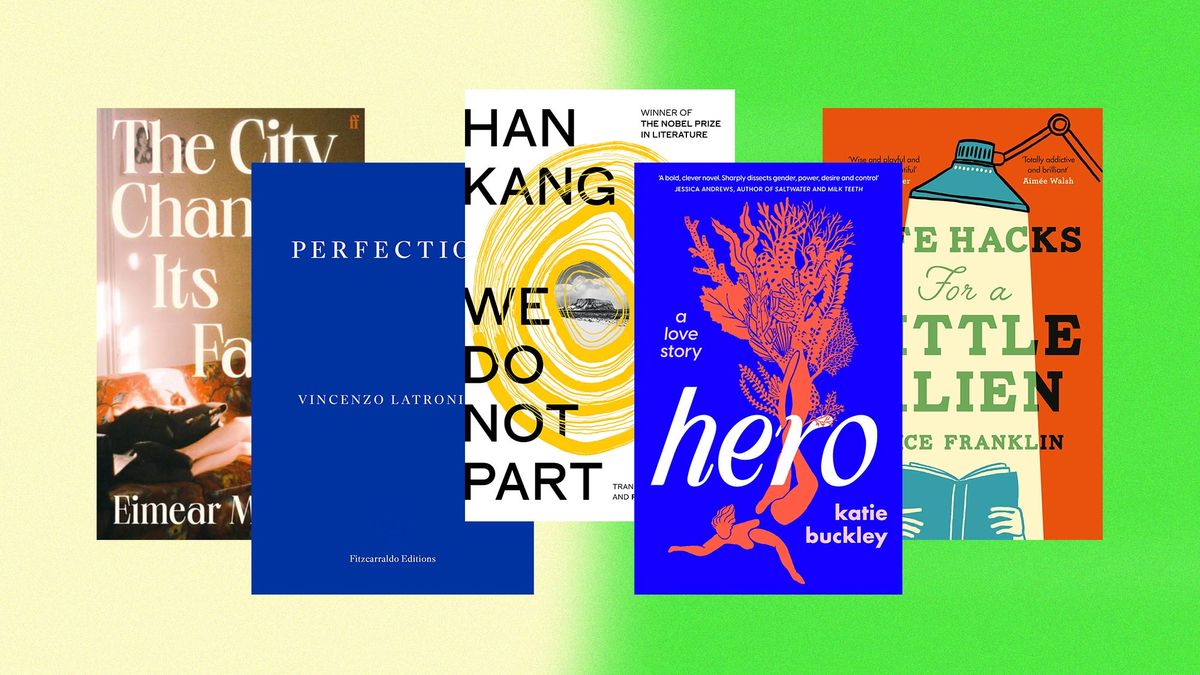
Welcome to the first instalment of your go-to reading list for 2025—where we bring you all the very best new book releases of the year. So, if you’re looking for a new book, you’ve come to the right place. We’ve got you covered with our edit of this year’s must-reads
Our picks are a proper treat—a monstrous game of tit-for-tat played out on the edge of the Nile, a couple of sharped-eyed looks at millennial ennui that showcase two very different sides of Berlin and a devastating reflection on one of the darkest incidents in South Korea’s history are just for starters.
We also roam the globe trying to trap an ancient evil soul, bunk off school for the day during a long, hot 1980s English summer, follow a young neurodivergent girl as she navigates the tricky path into young adulthood and lots, lots, more.
Perfection, Vincenzo Latronico
Anna and Tom are young digital creatives living the dream in an enviable apartment in an enviable neighbourhood in Berlin in those heady early years of the new millennium. They have swapped, they believe, the nine-to-five yoke of their parents’ generation for a bold, individual lifestyle… that just happens to mirror that of their peers, right down to the fonts and kerning they use in their designs. The couple have a thing for mid-century furniture, boast a large, leafy plant collection, go to gallery openings, experiment with sex and drugs, tip in cash and boycott Uber. Latronico’s portrait is wryly – at times wince-inducingly – funny (we are all, after all, a Tom or an Anna to some degree), but Perfection does more than take simple pot-shots at their ‘identical struggle for a different life’. Underneath its coolly teasing affection, it offers a deeper look at a generation who grew up online and were sold liberation as just yet another means to exit by way of the gift shop – and who are now left wondering where to go next.

Dark Like Under, Alice Chadwick
A slow and absorbing piece of literary fiction, Chadwick’s polyphonic debut is set, Mrs Dalloway-style, across a single English summer’s day. It follows the students and teachers of an elite 1980s high school at the end of term as news of the death of a much-loved teacher, Mr Ardenne, becomes known. Chadwick reveals the inner lives and backstories of its huge cast of characters with delicacy, precision and not a little humour. Like a modern-day Songs of Innocence and Experience, she captures the fierce intensity of these not-quite adults eager for a life beyond the close world of family, friends and school they’ve known, against the prism through which their teachers, with their knowledge of what the years that separate them can bring, reflect on the other way. Chadwick’s prose stays on the right side of sentimentality throughout, reaching its peak with subtle, almost transcendent, grace in the novel’s coda, as the truth about Mr Ardenne’s final moments is revealed. Just lovely.

Life Hacks for a Little Alien, Alice Franklin
‘Little Alien’ is a story about a young neurodivergent girl growing up outside London in the 1990s who struggles with school and her general place in the world. That is until she discovers the power of written language – and one mysterious ancient book in particular, which some believe to have been delivered to Earth by an alien life force – and slowly, steadily comes into her own. Tender, playful and funny, the novel’s singular narrative voice reveals the world as its unnamed narrator sees it (complete with footnotes), while simultaneously shining a light on the lives and all-too-human failings of those around her. It might still be too soon in the year to call it, but this looks set to be one of the most affecting and original reads of the year.

The International Booker winner and Nobel laureate returns with a slippery tale. Part ghost story, part brutal historical record, it’s narrated by Kyungha, a writer living in Seoul who is dogged by continuous nightmares and ill health after researching a book about mass killing and torture. Kyungha is slowly pulling the pieces of her life back together when she’s contacted by a former colleague and friend. Inseon is in hospital after a near-fatal injury in her carpentry workshop. She begs Kyungha to go to her home on Jeju Island to save her pet bird, which has been left caged and abandoned, from dying. After battling a snowstorm to reach the remote house where Inseon grew up, Kyungha wakes the following morning to find herself in a half-world, full of ghosts and shadows. As the island’s dark past is gradually revealed, the narration veers from plain-speaking accounts of the real-life massacre that took place on Jeju shortly before the Korean War and poetic discourses into the paradoxes of snowflakes and candle flames and the fragile structure of a bird’s skeleton versus its strength in flight. It is an elliptical, uneasy read. But then again, how else to hold a mirror to the horrors of what lies hidden in our collective selves and histories when, all too often, they do so in plain sight?

Another visit to noughties Berlin. This time, our dip into the grimy depths of its drug-swirling techno party scene is navigated by Nila, 18-year-old daughter of Afghan refugees who fled their prosperous lives in Kabul for the grim realities of immigrant life and, in the wake of 9/11, rampant anti-Arab racism. (Should anyone ask her, Nila ‘identifies’ as Greek). Returning to the city from boarding school after her mother’s sudden death, Nila is ‘ravaged by the desire to ruin my life’. A key part of that involves willingly sacrificing her dreams of studying photography for the dubious (in every sense of the word) affections of thirtysomething Marlowe – a once feted American writer whose star is quite clearly on the wane. As befits all good coming-of-age stories there are lessons aplenty to be learnt here and Nila’s are as touching as they are hard won.

What would you do to live forever? Barker’s edge-of-your-seat literary horror is a page-turningly gripping read about a centuries-old woman who has willingly and continuously sacrificed everything to do just that after a chance meeting in Osaka airport brings her nefarious dealings into the light. We get to know her over the course of two feverish days in the wilds of the New Mexico desert in 2022 as she sets out to take down her next victim. This present-day action is interspersed with deftly told testimonies that track the paths and fates of her previous victims as recorded by Jake, how is determined to avenge the friend he lost to the woman by putting a stop to her quest once and for all. Can he succeed – and, if so, at what cost?

The Edges, Angelo Tijssens
What’s that line about never going back? Having returned to the town he grew up in following the death of his abusive mother, an unnamed narrator battles through a storm to visit the boy he first fell in love with. Over the course of their night together, the complications and confusion of their shared past resurface and continue to echo alongside those of his troubled childhood as he goes about settling his late mother’s affairs the next day. ‘We thought we were big and strong and all sorts of other things that we later learnt we weren’t and what’s more, never would be,’ he recalls of a day spent at the beach when they were kids. That duality, the push-me-pull-me hesitancy between child and adult, between that of our inner and outer lives – who we wish to be seen as and what we are desperate to hide – is explored beautifully in this sensitive debut.

Havoc, Christopher Bollen
Bollen’s gloriously waspish thriller is an out-and-out romp. After several years’ hotel-hopping her way through Europe, widowed American Maggie has been holed up at a faded grand hotel in Luxor, Eygpt, where she has settled into a routine of morning stretches, lunchtimes by the pool and sunset watches with her fellow guests. She has discovered she has a gift, she tells us, for spotting unhappy relationships and, in the past, had taken it upon herself to ‘free’ her fellow guests from such shackles by fair means or foul. After a meddle too far, Maggie is determinedly on hiatus – but they don’t call it a ‘calling’ for nothing. Compelled into action one more time, Maggie is spotted planting (false) evidence of an affair by eight-year-old Otto, a new arrival to the hotel who immediately sets out to blackmail her and an increasingly monstrous game of tit for tat ensues. As one bad act begets another and another, Bollen leans into said monstrousness with glee and things soon escalate to hilarious and horrific effect. A brilliantly fun read.

The Elizabeth is Missing author returns with a striking novel about coercive control and bodily autonomy. Cassie is working as a personal trainer when the controlling ex-boyfriend it has taken her months to shake books into a session in her gym. The twist? Thanks to a benign tumour pressing on his optic nerve, Liam is now blind. While the sensible option would be for Cassie to swiftly and discreetly exit stage left, she can’t resist getting up close and personal with her former tormentor. With a spray of Armarni Code and a change to her accent, ‘Steph’ sets to training, testing – and exacting some revenge – on the ex who put a lock of the fridge, confiscated her house keys and fed her an emetic when she dared to fancy a little cake. It’s a credit to the quality of Healy’s writing that despite the implausibility of the set-up she largely keeps the reader on the right side of suspending their disbelief – not least because by leaning into it she reveals how the patterns of such a toxic, coercive relationship, once established, aren’t so easy to shake off. One to get the book club debates flying, for sure.

The City Changes Its Face, Eimear McBride
When the story opens in a shabby corner of London’s Camden in 1996, Eily and Stephen (from McBride’s 2016 novel The Young Bohemians) have been together for two years. She is a 20-year-old drama student, he an actor-turned-filmmaker, twice her age at 40, and their relationship is on rocky ground. If that sounds like just another novel furrowing that well-trodden narrative path signposted: Relationship In Crisis, think again. McBride, who turned the coming-of-age novel on its head with her searing, prizewinning debut A Girl Is A Half-Formed Thing and who is rightly championed for her experimentation with language and form, would never opt for anything so straightforward. And so it is here. Told in dual timelines, McBride carefully peels back the layers of Eily and Stephen’s personal histories and that of their relationship to reveal all that brought them to the flashpoint of their current crisis. It is, as ever with McBride, visceral and brutal. Child abuse, drugs, self-harm and more all feature, picked up, turned around and revealed in new and startling ways by McBride command and shaping of form and language. Read it and weep.

Show Don’t Tell, Curtis Sittenfeld
The Romantic Comedy author returns with a funny and astute collection of tales of well-to-do-ish middle-aged midwestern American lives (most of them women) who find themselves caught somewhere in the gulf between who they were and where they are now. Quite literally in the case of ‘Lost But Not Forgotten’, which features Lee Fiora, protagonist of Sittenfeld’s debut novel, Prep, returning to school for her 30-year reunion. While its focus is on friendship and marriage (and the strengths and failings thereof), there are the expected sharp-eyed takes on privilege, class, fame, creative freedom and more. Funny and astute.

Mothers and Sons, Adam Haslett
The son and mother of the title are Peter – an immigration lawyer living and working in NYC – and Ann, who runs a spiritual retreat with her lover, Clare. Their relationship is complicated to the point of estranged, and Haslett takes his time peeling back the layers on why and how this has come to be: the easy answer, that Ann left Peter’s father for years before, is only the start of it. For Peter, the trigger into a proper reflection into his past comes from the case he takes on of a young, gay Albanian asylum-seeker who is petitioning on the grounds of homophobic persecution in his home country. As mother and son both begin to face their pasts, their stories come together to reveal subtle truths about the ties that tear us apart as much as bind.

Disappoint Me, Nicola Dinan
Dinan follows up her acclaimed debut, Bellies, with a fresh take on tangled relationships and millennial ennui in the tale of Max, a would-be poet who works as a lawyer for a tech start-up where she poses as ‘Owl’, the company’s AI. Throwing herself back into the dating scene after a messy breakup, she meets City-boy Vincent, who appears to be too good to be true. Told in dual narratives between the pair, there is indeed more to Vincent’s backstory than first appears.

Steed’s elegantly confident debut is an explosive portrait of the artist as monster in the form of Edouard Tartuffe (Tata) who, by the time we meet him in 1920, has spent years shuttered away in Provence with only his art and his niece Ettie for company. The arrival of aspiring young journalist Jacob that summer disrupts the household’s careful balance, unleashing secrets and giving fire to Ettie who, after so long living in Tata’s shadow, is beginning to understand ‘there is something inside her reaching towards the light’. But at what cost and to whom?

Wary of commitment despite being happy in her live-in relationship with the man she loves, our hero (the Hero of the title) is given seven days by said love in which she must to decide whether or not to accept his offer of marriage. As she struggles with what she believes to be the sacrifices inherent in such a decision, Hero ranges across myth, folklore and fable – not least those she and those close to her tell of their own personal histories. Can she (re)write her own happy ending or is she forever doomed to rinse and repeat?